🔮 Weird Tales & Urban Legends
The Forgotten Factory and the Whisper of Lost Souls
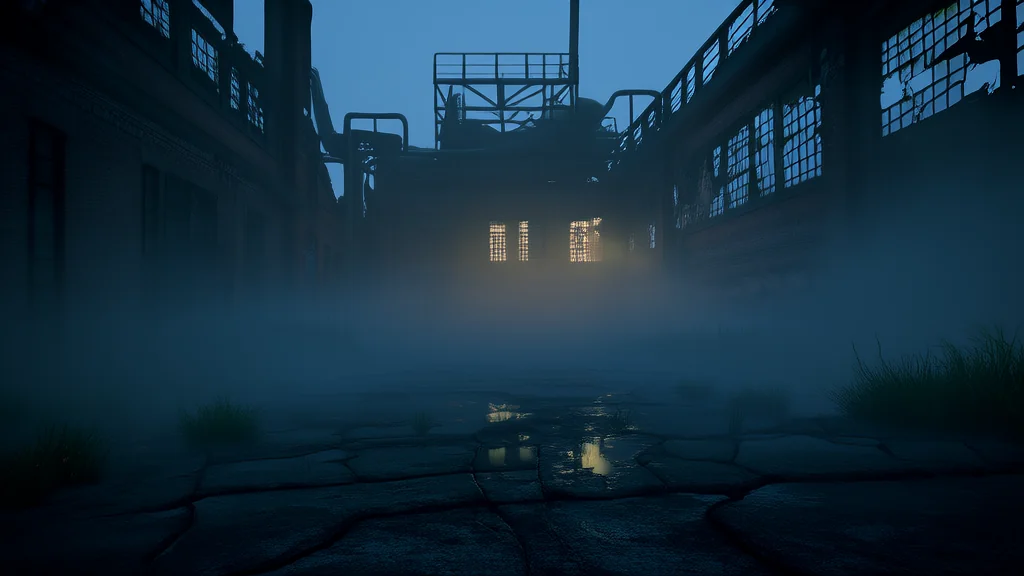
The old factory on the edge of town had been abandoned for over thirty years, its rusted metal frame standing like a forgotten relic. No one knew exactly when it had stopped operating, but the stories that followed were as varied as the people who told them. Some said it was cursed by the ghosts of workers who died in an accident. Others claimed it was built on an ancient burial ground. Whatever the truth, the building had become a place of quiet dread, where no one dared to go after dark.
A group of teenagers, curious and foolish, decided to explore it one autumn evening. They had heard whispers of strange lights flickering in the windows, and the sound of distant laughter that no one could explain. Armed with flashlights and a sense of bravado, they approached the factory’s crumbling entrance. The door creaked open with a groan that echoed through the empty streets, as if the building itself were sighing.
Inside, the air was thick with dust and the scent of mildew. The floorboards groaned under their feet, and the walls were lined with faded graffiti and rusted machinery. The deeper they went, the more the atmosphere shifted. It wasn’t just cold—it felt like the temperature had dropped into another dimension, where time moved differently. One of the boys, Liam, noticed something strange: the shadows seemed to move on their own, shifting in ways that didn’t match the light from their flashlights.
They found a large room with a central pillar, which had once held a massive machine. Now, it was covered in cobwebs and what looked like dried blood. The group hesitated, but curiosity pushed them forward. As they examined the area, a sudden gust of wind blew through the broken windows, sending papers flying like ghostly birds. A low hum filled the air, vibrating in their bones. It wasn’t loud, but it was there—constant, insistent.
Suddenly, the flashlight of one of the girls flickered and died. The others followed, one by one, until all that remained was the faint glow of a single lantern. Panic set in. They tried to leave, but the exit had vanished, replaced by a wall of smooth, unbroken concrete. The walls themselves seemed to pulse, as though breathing. The hum grew louder, and the temperature dropped further, turning the air into a thin mist that clung to their skin.
Then, the laughter began. It wasn’t loud, but it was everywhere at once. It came from the walls, the floor, even the ceiling. It wasn’t human, but it sounded familiar—like the voices of people they had never met. The teenagers froze, unable to move. Time stretched and twisted, and for a moment, they saw images—flickers of workers moving in silence, their faces pale and hollow, their eyes staring straight ahead. They weren’t looking at anything, but they were watching.
One of the boys, Jake, broke the silence. “We need to get out,” he whispered, his voice trembling. But when he turned around, the hallway behind them was gone. In its place stood a long, narrow corridor, lined with doors that had never been there before. Each door was slightly ajar, revealing glimpses of rooms that shouldn’t exist. Inside, figures sat in chairs, facing away from the door, their heads tilted back as if listening to something only they could hear.
The laughter stopped. A heavy silence fell over them. Then, from the far end of the corridor, a single door creaked open. A soft light spilled out, illuminating a small room with a single chair. In the chair sat a figure, still and silent. The teenagers stared, frozen. The figure turned slowly, revealing a face that mirrored their own.
It was them. Or at least, it looked like them. But their eyes were black, and their mouth was sewn shut with thick, dark thread. The figure stood up, walked toward them, and pointed to the door they had come through. Then it spoke—not with words, but with a feeling, a deep, resonant pressure in their minds: *You are not welcome here.*
The teenagers ran, stumbling through the corridors, their breaths ragged. When they finally reached the entrance, the door was open, and the night outside was still and silent. The factory loomed behind them, its windows now dark and empty. They didn’t speak as they left, but each of them carried the same question: Had they really left? Or had they simply stepped into another version of the same place?
In the weeks that followed, none of them could remember exactly what had happened. But the factory remained, standing tall and unmoved, waiting for the next curious soul to step inside. And sometimes, when the wind blew just right, you could swear you heard the laughter again—soft, knowing, and just a little too close.
发布于 en
🔗
相关站点
- AI Blog — AI 趋势与技术新闻