🔮 Weird Tales & Urban Legends
Clocks of Blackmoor Ticked Backward in the Summer of 1987
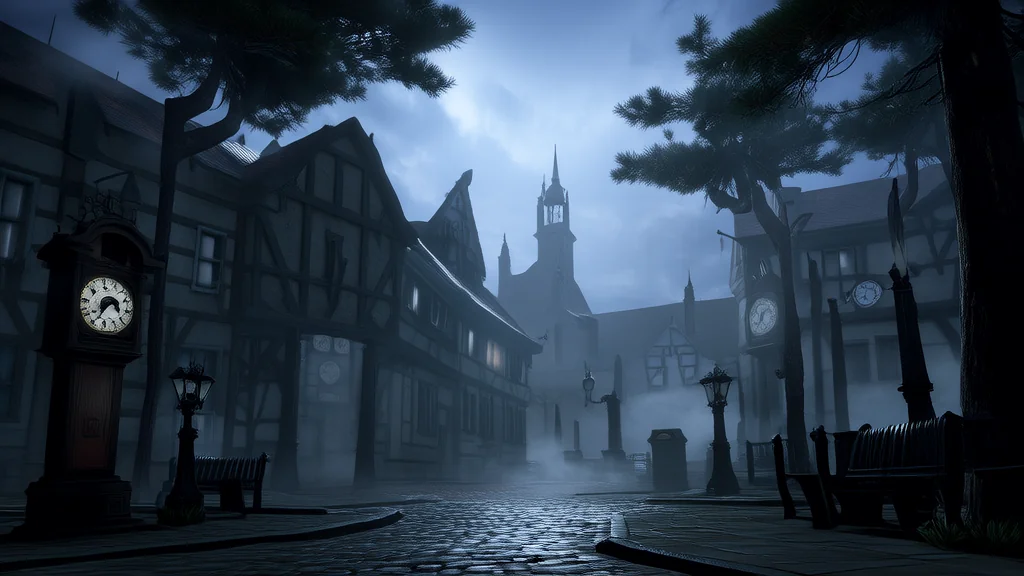
The town of Blackmoor had always been quiet, nestled between the hills and the forest that whispered secrets to those who dared to listen. Most people passed through it without a second glance, but for those who stayed, the air seemed to carry a weight, as if the sky itself was holding its breath. It wasn’t until the summer of 1987 that the strange events began.
It started with the clocks. At first, they were just a few minutes slow—nothing unusual. But soon, the clocks began to move on their own. A grandfather clock in the corner of the general store would tick forward by an hour, then stop, then start again, but not in sync with any other timepiece. The town’s only watchmaker, Mr. Thorne, tried to fix them all, but each one he touched would either break or begin to run backward. He stopped trying after the third one, muttering about “something wrong with the air.”
Then came the shadows. Not the kind you see when the sun dips behind a tree, but full-bodied, shifting figures that moved without light. They appeared at the edges of people’s vision, lingering just long enough to make your skin crawl before vanishing. Some claimed they saw a child walking down the middle of the street, hands clasped behind its back, eyes staring straight ahead. Others swore they heard laughter from empty rooms, soft and high-pitched, like a child’s voice echoing off the walls.
The most unsettling part was the silence. Even the birds stopped singing. The wind, which usually howled through the trees, became still. The townspeople grew uneasy, but no one could explain what was happening. They spoke in hushed tones, avoiding certain streets, especially the old mill at the edge of town. No one knew why, but everyone avoided it.
One evening, a man named Elias found himself wandering near the mill. He had no memory of leaving his house, only that he stood beneath the moonlight, staring at the creaking structure. The door creaked open before him, as if inviting him inside. Inside, the air was thick with the scent of damp wood and something else—something sweet and metallic, like blood and honey.
He walked through the dark corridors, his footsteps echoing in the stillness. Then he heard it—a whisper, low and melodic, calling his name. It wasn’t loud, but it was insistent, pulling him deeper into the building. In the center of the mill, he found a room with a single chair and a mirror. The mirror showed nothing but his reflection, but when he turned around, the room was different. The walls had grown taller, the floor uneven, and the air felt heavier.
In the mirror, he saw another version of himself, smiling. The figure stepped forward, and Elias followed. When he looked again, the mirror showed only the empty room. He ran out, heart pounding, and didn’t speak of it for weeks. But the next day, the townspeople noticed something strange: the mirror in the mill was gone, replaced by a blank wall. No one remembered it being there, and no one could explain how it had disappeared.
As the days passed, more things began to change. The flowers in the town square bloomed out of season, their colors too vivid, their scents too strong. The river, once clear and cool, turned black and sluggish, yet it never smelled bad. Children would wake up with drawings on their arms—symbols they couldn’t remember making, but that looked ancient, almost sacred.
No one knew where the changes came from, nor why they happened. Some believed it was a curse, others a test, and some thought it was simply the town’s way of remembering. But the truth remained hidden, like a secret buried deep beneath the earth, waiting for someone to dig it up.
And so, Blackmoor continued, unchanged and yet forever altered. The clocks still ticked strangely, the shadows still lingered, and the silence still held its breath. But the people moved on, as they always did, carrying the weight of the unknown with them, wondering if the strange things were a warning—or a gift.
Published on en
🔗
Related Sites
- AI Blog — AI trends and tech news