🔮 Weird Tales & Urban Legends
The Clock Tower of Hollowbrook and the Whispers That Never Sleep
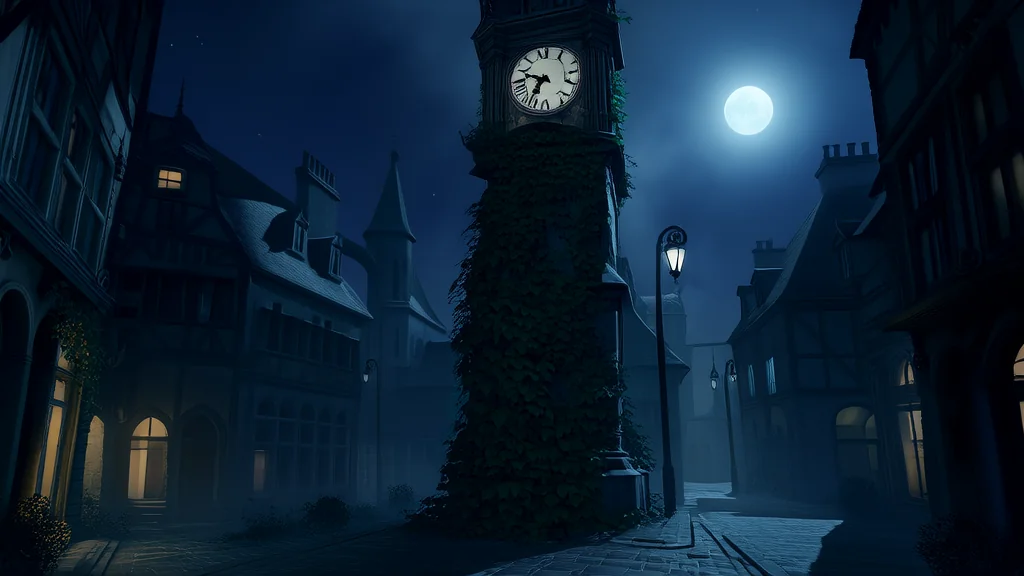
The town of Hollowbrook was known for its quiet, unassuming charm. Nestled between rolling hills and a dense forest, it had always been a place where time seemed to move slower, as if the world outside had forgotten it existed. Most people who passed through didn’t stay long, but those who did often spoke of strange things—whispers in the wind, shadows that moved without cause, and the feeling of being watched even when alone.
It began with the clock tower. No one remembered when it was built, only that it had stood at the center of the town square for as long as anyone could recall. Its hands never moved, frozen at 3:07 a.m. The townspeople had long stopped trying to fix it, muttering about how it was cursed or haunted. But no one dared to take it down.
Then came the first real incident. A young woman named Clara, who had recently moved into the town to escape the noise of the city, found herself drawn to the tower each evening. She would sit on the steps leading up to it, watching the sky change colors as the sun dipped below the horizon. One night, she noticed something unusual—a faint glow emanating from the tower’s base, like candlelight flickering behind a curtain.
Curious, she approached. As she reached the door, it creaked open by itself. Inside, the air was thick with the scent of old wood and something else—something sweet and metallic, like blood mixed with honey. The room was small, with walls covered in faded paintings of faces that seemed to shift when she wasn’t looking directly at them. At the center stood an old grandfather clock, its hands still frozen at 3:07 a.m.
Clara reached out to touch it, and the moment her fingers brushed the wood, the room grew colder. A low hum filled the air, vibrating in her bones. She heard a voice—soft, whispering, not quite in English, but not entirely foreign either. It spoke of things she couldn’t understand, yet felt deep in her chest.
She ran out, heart pounding, and never returned to the tower again. But the next day, the townspeople noticed something odd. The clock tower had changed. The face was now cracked, and the numbers were different—12:15 instead of 3:07. No one could explain how it had happened, but the whispers began soon after.
Over the following weeks, more strange occurrences surfaced. People reported hearing their own voices speaking in the middle of the night, though they were alone in their rooms. Some saw reflections of themselves that didn’t match their movements. Others claimed to feel a presence in the corners of their homes, unseen but undeniable.
The town council tried to dismiss it all as superstition, but the stories spread. Children started drawing pictures of the clock tower, even though none of them had ever seen it before. Adults found themselves walking toward the square at odd hours, compelled by an invisible force. And every night, at exactly 3:07 a.m., the clock tower would emit a soft, pulsing light, as if it were breathing.
One evening, a man named Thomas, a retired teacher who had lived in Hollowbrook for over forty years, decided to investigate. He had always believed in logic, in the tangible, and he wanted to know what was really going on. He brought a flashlight, a notebook, and a sense of calm determination.
He arrived at the tower just before midnight. The air was still, the forest silent. As he approached, he felt a strange pull, like a magnet drawing him forward. The door was slightly ajar, and he stepped inside. The room was exactly as Clara had described, but now there was a new addition—a mirror standing against the wall, reflecting not his image, but a version of himself with hollow eyes and a faint smile.
Thomas reached for the mirror, but before he could touch it, the lights went out. The room plunged into darkness, and then the sound began—a low, rhythmic tapping, like someone knocking on the floor. It grew louder, faster, until it became a heartbeat. The mirror shattered, and from the shards, figures emerged—shadowy, faceless, moving with unnatural grace.
Thomas screamed, but no sound came out. He tried to run, but the door was gone. The figures surrounded him, and in that moment, he understood. The tower wasn’t just a building. It was a gateway, a place where time and memory intertwined. The people who entered never left the same way they came.
When the townspeople finally found Thomas, he was sitting in the square, staring blankly at the clock tower. He couldn’t remember how he got there, only that he had been somewhere else, somewhere he couldn’t name. His eyes were empty, and when asked what had happened, he simply whispered, “It’s not the tower that’s wrong… it’s us.”
And from that night on, the clock tower no longer showed 3:07 a.m. or 12:15. It showed different times, changing with the mood of the town. Some say it’s waiting for someone to finally understand. Others say it’s already too late. But no one dares to look too closely.
发布于 en
🔗
相关站点
- AI Blog — AI 趋势与技术新闻